El texto completo de este artículo está en inglés. Con gusto continuamos la conversación en su idioma.
Buying pre-construction is buying a promise. The renderings are beautiful, the sales gallery is beautiful, and the residence you are being shown does not exist. That is not a reason to avoid it — some of the best value in South Florida over the last decade has come from buying early — but it does mean the diligence is different from buying something you can walk through.
A sales gallery is a marketing instrument. That is not a criticism — it is what it is for — but it means the room is designed to answer the questions it wants asked. The questions below are the ones it is not designed for, and they are the ones that decide whether a pre-construction purchase turns out well.
Start with the developer, not the building
The single largest risk in pre-construction is not the design, the location or the price. It is whether the building gets finished, on something close to the schedule you were told. A developer with a long South Florida track record and completed projects you can go and stand inside is a fundamentally different proposition from a first-time sponsor with an option on a parcel.
Ask who the developer is, what they have delivered in this market, and how those buildings performed on resale. Then go and look at one. A finished building tells you more about a developer than any brochure.
Understand what your deposit is doing
Florida pre-construction contracts typically stage deposits across the construction period — at contract, at groundbreaking, at top-off, at closing. The specific schedule varies by project and it is negotiable more often than buyers assume.
What matters is where that money sits. Ask whether deposits are held in escrow, which portion the developer is entitled to draw on for construction, and what happens if the project is cancelled or materially delayed. These answers are in the offering documents. They are rarely in the presentation.
Read the exposure, not the floor plan
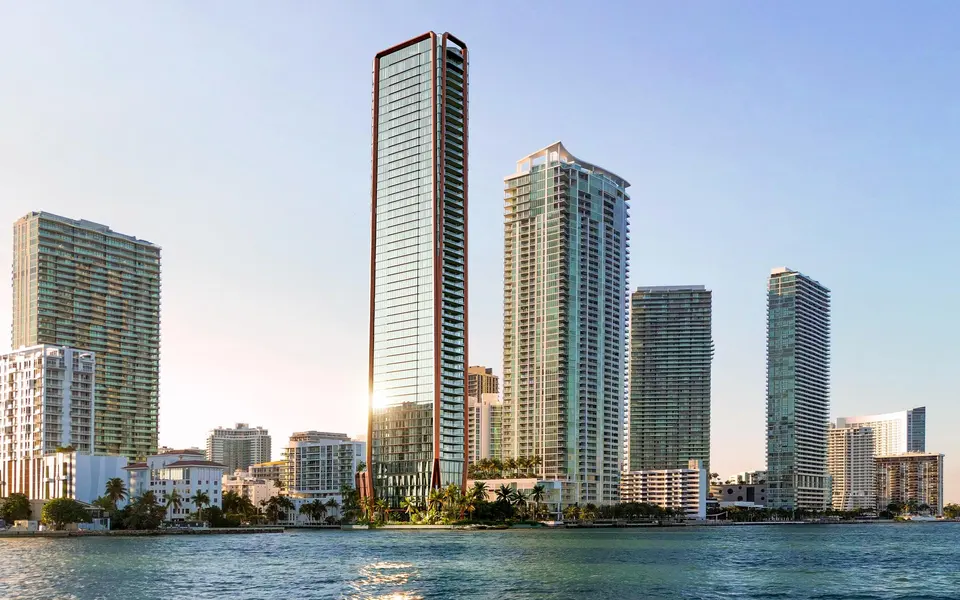
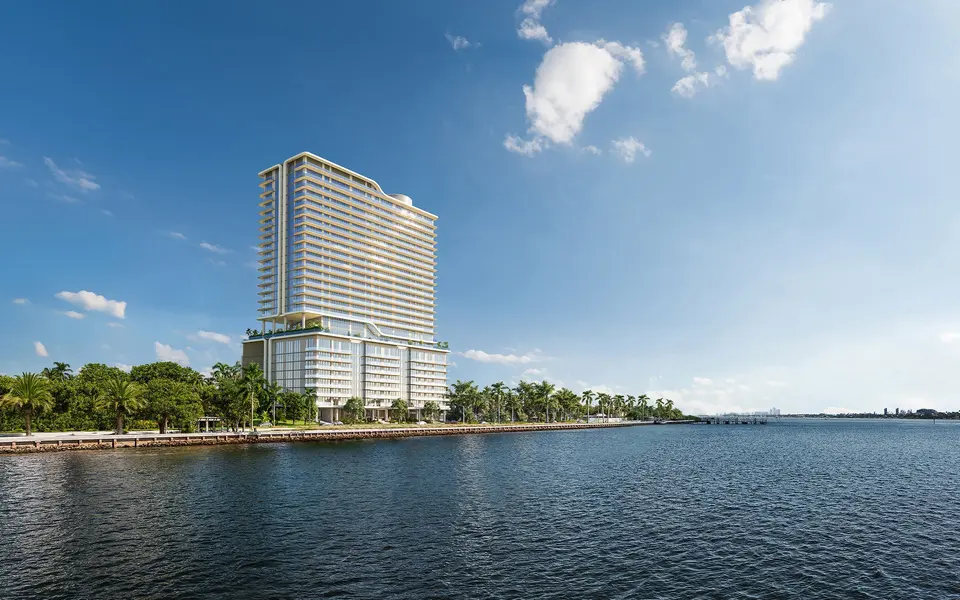
A floor plan tells you the layout. It does not tell you what you will be looking at in 2030. In Brickell, in Edgewater and along the West Palm Beach waterfront, the parcel next door is frequently developable — and a bay view can become a wall.
Before committing to a line, establish what is entitled around the site, what the zoning permits on adjacent parcels, and whether the view being sold is protected by a park, a waterway or a height restriction — or simply by the fact that nobody has built there yet. The second kind of protection is not protection.
Price it against what is coming, not what has sold
Comparable sales in a pre-construction market are backward-looking by definition. The relevant comparison is what else a buyer will be able to choose in the same neighborhood at the same delivery date — including buildings that have not launched yet.
When a project is priced above everything around it, there should be a reason you can articulate in one sentence: the brand, the frontage, the architect, the scarcity of the parcel. If there is no such sentence, the premium is a marketing decision rather than a market one.
The questions worth asking on every project
- What has this developer completed in South Florida, and how did those buildings resell?
- Is the deposit schedule negotiable, and where is the money held?
- What is entitled on the adjacent parcels, and what can be built there by right?
- What are the projected monthly carrying costs — association, taxes, insurance — and how were they estimated?
- Which lines are actually released, and which are being held back for later, higher pricing?
- What happens, contractually, if delivery slips by a year?
When early is genuinely worth it
Early pricing exists because early buyers take risk the later ones do not. That trade can be excellent — better line selection, better pricing, longer runway to close — and it can be poor, when the discount does not compensate for what you are absorbing.
My job is to tell you which one you are looking at. Sometimes the honest answer is that a project is very good and simply not for you, or that the right line in it sold six weeks ago. That answer is more useful than an enthusiastic one.
If you are weighing a specific pre-construction opportunity, send us the project and the line you are considering, and we will tell you what we would want to know before signing.